
Going Viral for Three Consecutive World Cups: What Makes Vatti’s World Cup Marketing So Successful?
Sports IP × Intangible Cultural Heritage IP: Another Winning Formula in Vatti’s World Cup Marketing.
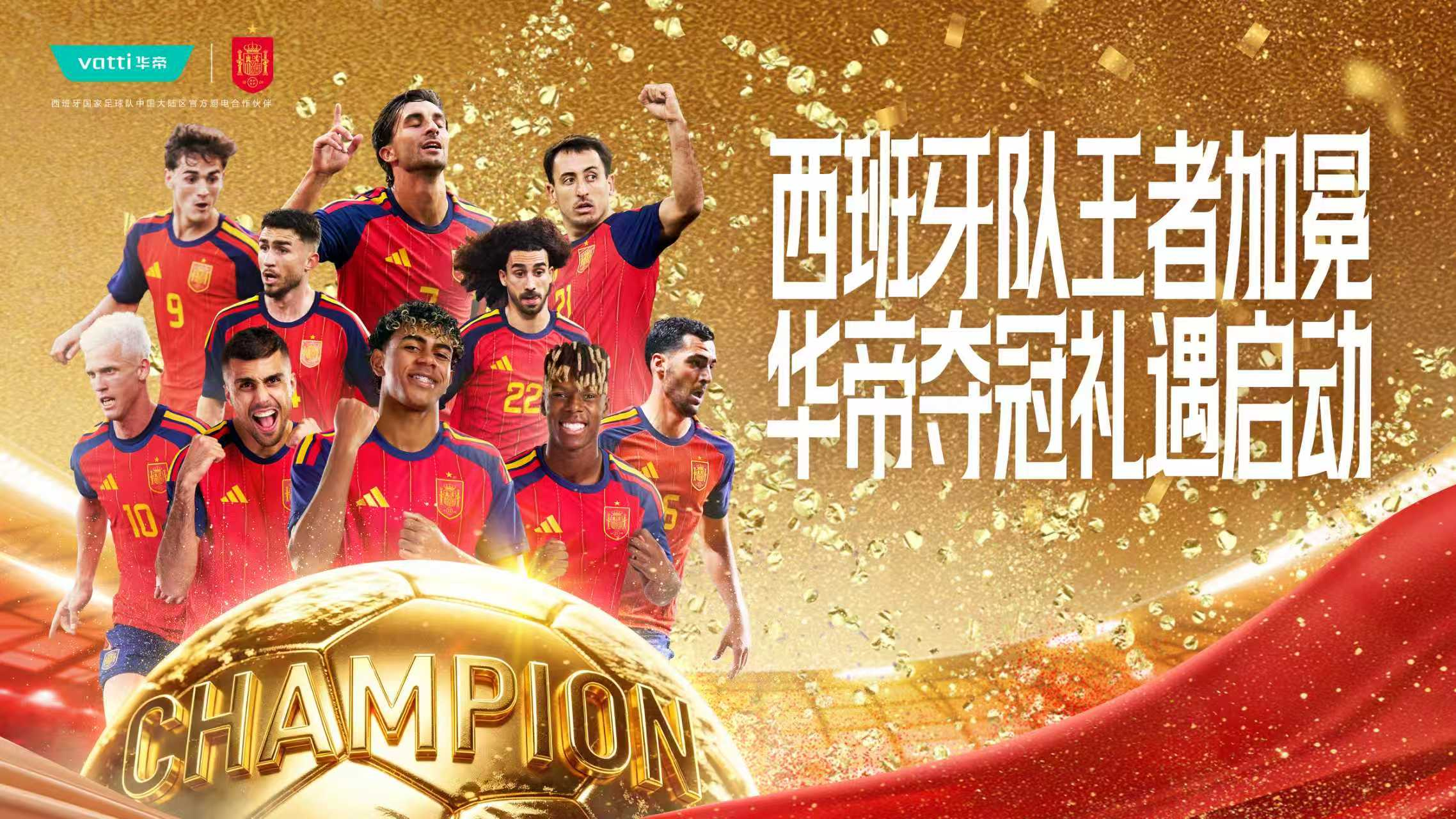
As Spain, under the gaze of the world, earned a second star on its jersey through sheer strength, the glory of its World Cup triumph also extended to the brands that had backed the team.
On July 20, with the final whistle, the 2026 FIFA World Cup hosted by Canada, Mexico and the United States came to a thrilling close. Sixteen years after their last triumph, Spain—known as La Roja—lifted the FIFA World Cup Trophy once again. The Iberian side defeated Lionel Messi’s Argentina, proving its strength and showing the world the formidable control that a new generation of Tiki-taka can exert on the pitch.
Brands that had supported Spain before the tournament were quick to offer their congratulations, including Yili, Luckin Coffee, TCL and Vatti. Luckin Coffee sponsored not only Spain but also Portugal, while TCL backed multiple national teams, including Argentina, Spain and Germany. Vatti, a leading Chinese premium kitchen appliance brand, was the only one to remain fully committed to a single team: Spain.
Across the 2018, 2022 and 2026 World Cups, Vatti partnered with France, Portugal and Spain respectively—and picked the eventual champion in two of the three tournaments. Its track record was so impressive that fans could not resist saying, “Please partner with my team next time.”
Compared with the previous two tournaments, Vatti’s World Cup marketing strategy changed noticeably this year. Rather than relying on a simple “full refund” promotion, the brand elevated its value proposition by putting Longquan celadon, an item of intangible cultural heritage, at the center of its campaign, complemented by a prize draw offering real gold. Immediately after the final, Vatti announced across all channels that the promotional rewards were officially being activated. The Chinese kitchen appliance “trendsetter” once again left a distinctive mark on the history of World Cup marketing.
Buzz, Traffic and Lasting Brand Value
Calling Vatti the World Cup’s “king of buzz” is no exaggeration.
In May this year, less than a month before the 2026 World Cup officially kicked off in Canada, Mexico and the United States, the dispute between CCTV and FIFA over World Cup broadcasting rights repeatedly trended online. In another sense, this also significantly heightened anticipation for the approaching tournament. Many netizens instinctively turned their attention to Vatti, wondering, “Which team will Vatti sign this time, and what campaign will it launch?”
Vatti earned its reputation as the “king of buzz” largely because its 2018 Russia World Cup campaign—“If France wins, Vatti will issue full refunds”—was simply too iconic and memorable to forget.
In the summer of 2018, as an official sponsor of the France national football team, Vatti launched its wager-style campaign: “If France wins the World Cup, Vatti will issue full refunds.” As France advanced through the tournament and reached the semifinals, public interest in Vatti’s World Cup campaign exploded. By the final, the internet was abuzz with people waiting for the result and speculating about whether the refunds would actually be honored. Baidu Index data showed a clear spike the day after each French victory during the knockout stage, with momentum building round by round. The day after France won the title, Vatti’s Baidu Index peaked at 486,490, surging 3,016.98% day over day, while the hashtag #VattiLaunchesFullRefunds ranked No. 1 on Baidu’s real-time trending searches.
In business terms, it became a classic case of leveraging an investment of less than RMB 80 million to generate RMB 1 billion in sales. When the market opened the day after France’s victory, shares of Vatti Corporation jumped more than 7%, indicating that the capital market strongly recognized the commercial value of the campaign.
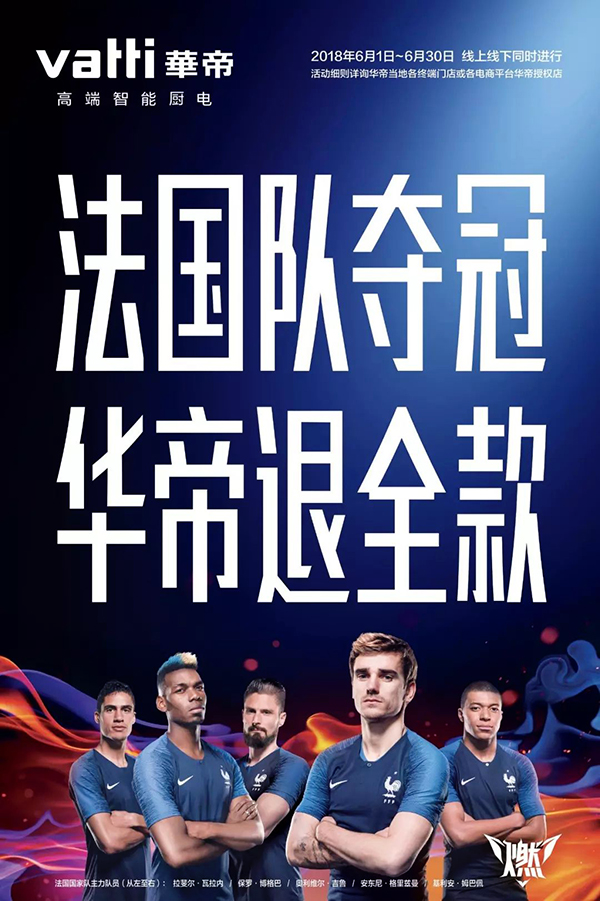
Since then, every World Cup has produced imitators of Vatti’s approach. But Vatti did not stop there. At the 2026 World Cup, it once again stirred up the market and the industry with a new combination of “sports IP × intangible cultural heritage IP”: “If Spain wins, receive a limited-edition, master-crafted Longquan celadon collectible.”
Discussing the strategic planning behind Vatti’s campaigns across three World Cups, Vatti Chief Marketing Officer (CMO) Pan Yezhao explained that during the 2018 Russia World Cup, the company needed a highly impactful event to send a clear signal to the world that “Vatti is here,” while quickly establishing an image among global consumers of products that are practical, attractive, reliable and technologically advanced. During the 2022 Qatar World Cup, Vatti shifted its marketing focus from traffic and exposure to emotional resonance, with the goal of further strengthening consumers’ perception of Vatti as a “champion brand.”
By 2026, amid a growing sense of mission around bringing Chinese culture to the world, Vatti recognized that its development priorities had fundamentally changed. Pan Yezhao said, “What we think about more now is how, from the perspective of a Chinese brand, we can share our distinctive culture and way of life with the world.”
The key to Vatti’s success across three World Cups lies in its clear understanding that high-quality sports marketing should never be a one-off celebration of traffic. Every campaign should contribute to the brand’s long-term value. Traffic is only a means; building lasting brand equity is the ultimate goal.
Rooted in the “Spirit of Sport”
Striving, passion and competitive intensity form the foundation of the World Cup. The electrifying spirit of athletic competition on the pitch is what has made the tournament a global super-IP.
The audience’s enthusiasm is clearly reflected in the numbers. During the first week of the tournament, Chinese central media reported cumulative reach of more than 1.8 billion across all media channels. Xiaohongshu officially disclosed that in just the first three days, fans generated 90 million interactions in its livestream rooms, demonstrating strong demand for real-time engagement while watching matches.
Clearly, the World Cup has long transcended football itself and become a gold mine of audience attention for brands.
For brands seeking to capitalize on the World Cup, the first step is to understand the spirit of sport and integrate it into their marketing activities. Looking back at the history of World Cup marketing, non-sports brands—such as home appliance and fast-moving consumer goods companies—have generally built their campaigns around three levels: FIFA, national teams and individual players.
At the 2018 Russia World Cup, Vatti entered World Cup marketing for the first time by signing the French national team and launching its “full refund if France wins” campaign, which made the brand an instant sensation. In the following two tournaments, Vatti continued its team-partnership model and has now worked with France, Portugal and Spain.
Much like fans’ emotional attachment to their favorite teams, Vatti’s primary consideration when choosing a partner is the team’s character—in other words, the brand values spiritual alignment and resonance. All three teams Vatti has partnered with are European sides with mature tactical systems. Their “belief in a system” echoes manufacturing’s emphasis on coordination across the business chain, while their exceptional skills are rooted in a “philosophy of professionalism,” mirroring the craftsmanship Vatti has cultivated through more than three decades in the premium kitchen appliance industry.

Spain’s squad at this World Cup had an average age of just 24.5, yet its new generation of players built on the team’s classic possession-based style while using speed and creativity to break established boundaries. This balance between respecting tradition and introducing bold innovation closely aligns with Vatti’s longstanding brand philosophy of finding equilibrium between heritage and innovation.
Belief in a system, a philosophy of professionalism and youthful energy—the team’s three defining qualities correspond closely to three characteristics of the Vatti brand, creating a vivid conceptual connection.
It is also worth noting that Vatti’s crossover into sports dates back to 2001, when the company created the “Victory” torch for China’s Ninth National Games. It later designed multiple torches for global sporting events including the Olympic Games and Asian Games, among them the iconic “Cloud of Promise” torch. This journey gave Vatti a comprehensive understanding of the sporting spirit and inspired the company to embed what it calls “torch quality” into every aspect of product development and corporate operations.
Guided by the “Spirit of Culture”
As a once-every-four-years arena of intense collective emotion, the 2026 World Cup clearly reflected a new marketing logic: emotional resonance inspired by culture is increasingly effective in winning the recognition and affection of younger consumers. One notable phenomenon was that beer-brand marketing became less prominent, while baijiu brands with stronger elements of Eastern culture entered the arena more aggressively and received a positive response.
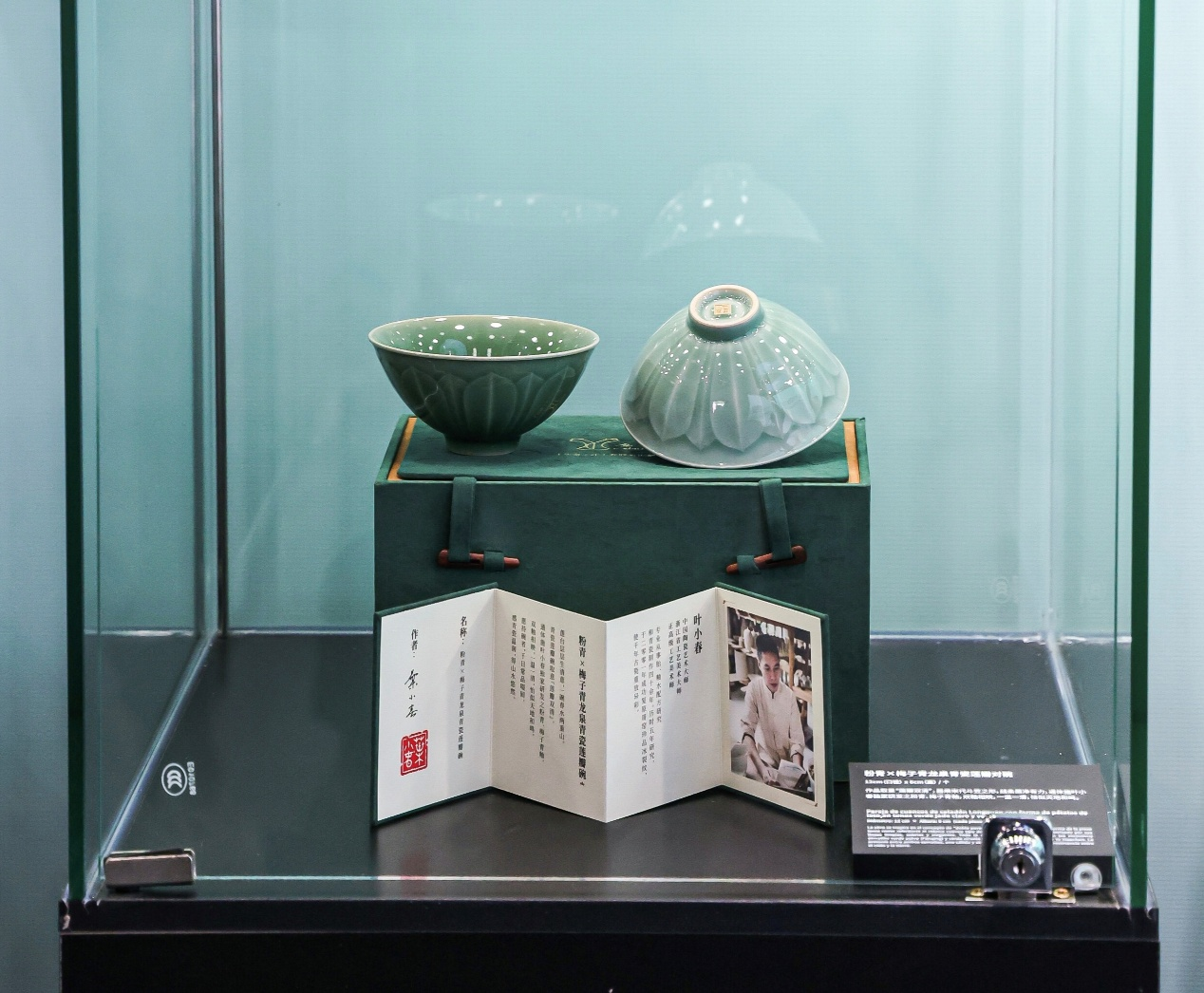
In this year’s World Cup campaign, Vatti innovatively incorporated the culture of Longquan celadon. It invited Ye Xiaochun, a Chinese ceramic art master and representative inheritor of the intangible cultural heritage of Longquan celadon, to create a special cultural gift for participating consumers: a “celadon-green × plum-green Longquan celadon lotus-petal bowl.” Born into a family of ceramic makers, Ye devoted years to his craft and successfully revived the millennium-old “ice-crackle” technique that had once been lost. Just before Spain’s opening group-stage match, Vatti presented the lotus-petal bowl created by Ye, together with an “Auspicious East Longquan Celadon Ice-Crackle Plate,” to the Embassy of Spain in China. The embassy, in return, presented Vatti with a Spain national team jersey.
Vatti Corporation Chief Marketing Officer (CMO) Pan Yezhao (right) presents celadon collectibles to Buitrago (left), Minister-Counsellor and Consul General of the Embassy of Spain in China.
Afterward, Xinhua and other media outlets reported on this people-to-people cultural exchange between China and Spain and spoke highly of the initiative, recognizing Vatti’s exploration of a new path for bringing Chinese culture to the world in the new era. Reportedly, these celadon pieces embodying Eastern craftsmanship later appeared repeatedly at key Spain matches alongside Xinhua’s reporting team, allowing a thousand-year-old intangible cultural heritage tradition to showcase the distinctive beauty of Eastern aesthetics on the world’s football stage.
Explaining the original intention behind combining the two IPs of the “World Cup × Longquan celadon,” Pan Yezhao said, “Traditional culture should not remain an abstract promotional concept detached from everyday life. It should become a tangible, ownable and perceptible aesthetic experience. Vatti hopes that every consumer who follows the tournament and supports the team will have an opportunity to own an authentic, master-level celadon collectible.”
According to the 2026 Douyin E-commerce Domestic Brand Consumption Data Report, over the past year, both transaction value and the number of active merchants generating sales orders among brands associated with time-honored Chinese brands and intangible cultural heritage increased by more than 40% year over year. Domestic brands gained more than 100 million new users, with consumers aged 24–40 accounting for more than 60%. Clearly, “intangible cultural heritage + everyday life” has become an important way for consumers—especially younger people—to express cultural confidence, and Vatti’s “World Cup × intangible cultural heritage” approach represents an effective response to this trend.
After Spain reached the quarterfinals, Vatti further increased the stakes of the campaign. If Spain won the World Cup, Vatti would commission the nationally accredited Guangzhou Nanfang Notary Office (Zhujiang New Town Office) to supervise the entire process and conduct a livestreamed random draw. From all consumers who purchased designated packages (the Championship Package or Peak Package) and met the requirements set out in the campaign rules, the notary office would randomly select 20 winners, each of whom would receive a 25-gram pure-gold football.
Many eligible consumers are no doubt now hoping that they will be among Vatti’s lucky winners.
Spain’s World Cup journey may be over, but the football miracles and marketing excitement of this summer continue. Whenever football legend Pelé was asked which of his goals was the greatest, he would answer without hesitation: “The next one!”
The same idea applies to those who remain committed to their visions and dreams—and who are willing and able to use the World Cup as a platform to tell China’s story in the new era.