
How Vatti Scored Twice—and Told a Compelling Story of Long-Termism in Sports Marketing.
There is a saying in marketing that the World Cup is a brand amplifier. The spectacular 2026 FIFA World Cup in Canada, Mexico and the United States seems to have proven the value of that statement once again.
Data shows that during the group stage alone, World Cup-related topics on Weibo generated more than 52 billion views, up 16.7% from the same period of the 2022 Qatar World Cup. Over three weeks, the tournament generated 1,295 trending topics, 942 of which entered the top 20. According to China Media Group, World Cup-related short videos reached an audience of more than 700 million across all media platforms.
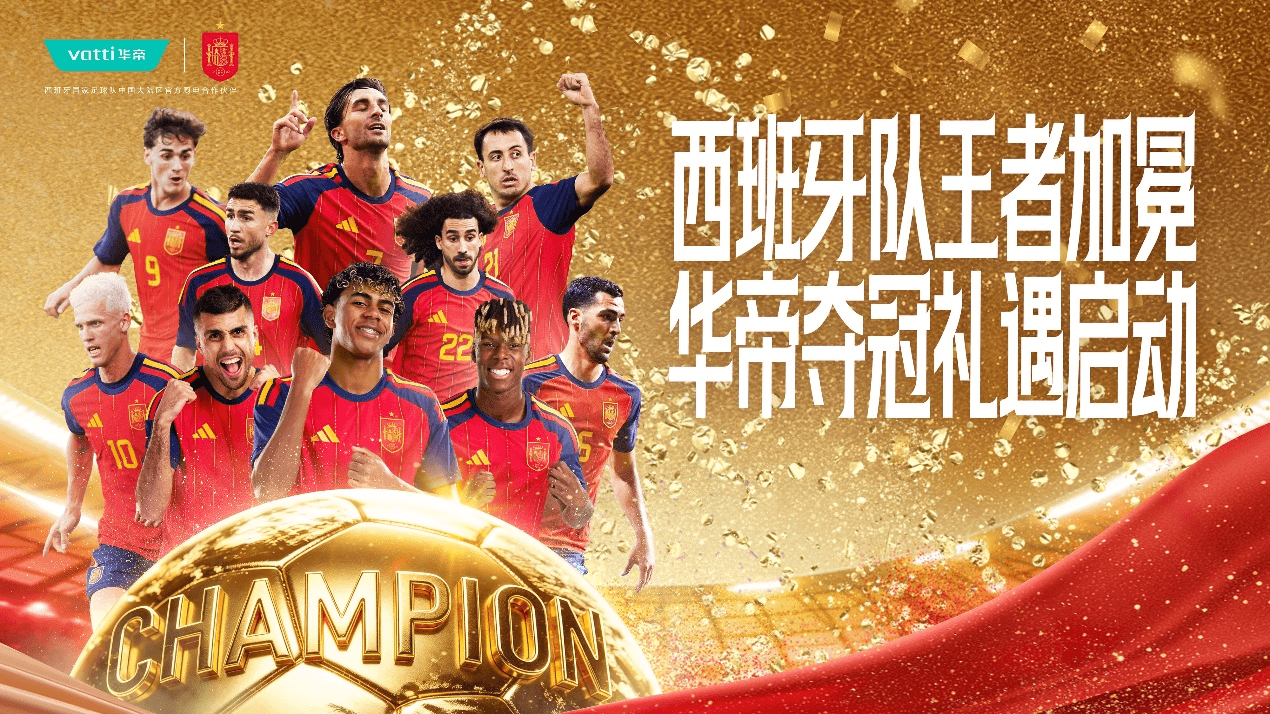
The performance of leading Chinese brands also left a strong impression on global audiences. Designer toy Labubu appeared at both the opening ceremony and the final; Hisense and Mengniu formed a playful “CP” pairing on pitch-side advertising boards; during hydration breaks, French star Kylian Mbappé was there to remind fans to “hydrate”; and Vatti, which correctly backed the champion for the second time, celebrated Spain’s victory by giving away Longquan celadon collectibles and holding a draw for pure-gold footballs.
Compared with the enormous cost of becoming an official World Cup sponsor, sponsoring an individual national team is clearly another effective and relatively lightweight strategy. Vatti is a prime example. In a third-party data analytics firm’s ranking of the “Top 10 World Cup Marketing Events by Communication Volume,” Vatti’s campaign announcing its backing of Spain and promising gifts if the team won the title made the list.
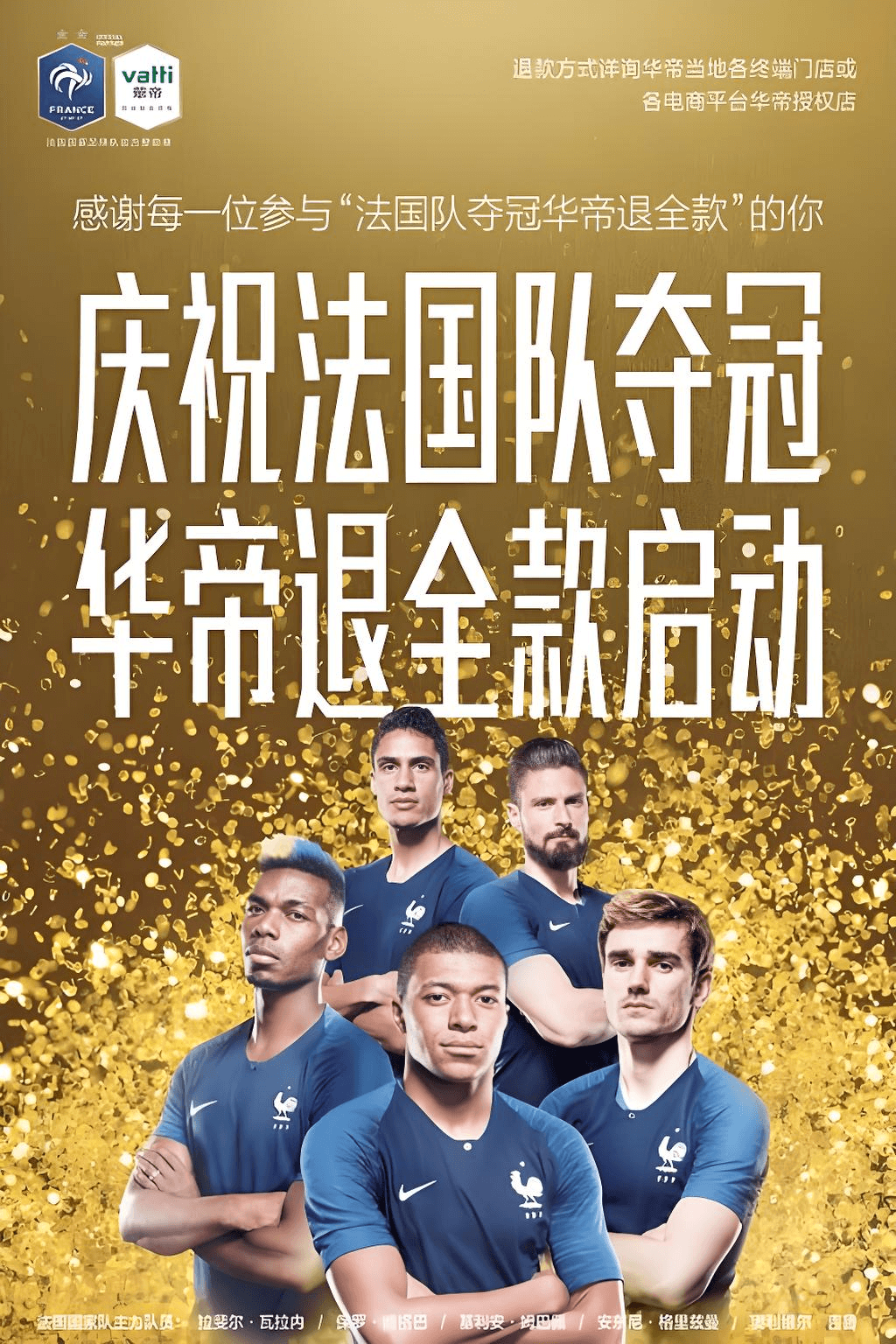
Vatti’s success at this World Cup inevitably brings back memories of the 2018 Russia World Cup, when the entire Chinese internet was captivated by the campaign “If France wins, Vatti will issue full refunds.” Why has Vatti repeatedly managed to “play” a new path and accumulate increasingly valuable brand assets?
From “Borrowing Attention” to “Building Brand Assets”
Audiences are changing, and so are the marketing pathways surrounding the World Cup.
On one hand, the World Cup IP is evolving into an “all-audience conversion gateway.” Active participation by female users—alongside men in both consumption and social sharing—has further strengthened the spillover power of this top-tier sports IP as a source of conversation and cultural buzz.
On the other hand, the World Cup is no longer merely an iconic sporting event; it has become a vehicle for expression with greater emotional intensity. Relevant reports show that traits such as “moving forward fearlessly,” “embracing challenges,” “international” and “fun” have become some of the most significantly strengthened personality attributes associated with the World Cup IP. In addition, this tournament expanded for the first time from 32 to 48 participating teams, making the event feel broader in scale and richer in topics for discussion.
Together, these two developments point to the same trend: the World Cup is no longer simply a one-off marketing moment for brands. It now offers dual value—short-term conversion and long-term accumulation. Accordingly, the focus of brand marketing should shift from merely “borrowing traffic” toward “building memories and expanding audiences.”
The evolution of Vatti’s World Cup marketing closely follows this broader shift.
At the 2018 Russia World Cup, “If France wins, Vatti will issue full refunds” swept across the internet. After France won the title, topics related to “Vatti full refunds” rose to No. 1 on Baidu’s real-time trending searches. Through this marketing storm, Vatti announced to the world, “We are here,” while leveraging the event to establish an impression among global consumers of products that are practical, attractive, reliable and professional.
During the 2022 Qatar World Cup, Vatti partnered with Portugal and shifted its marketing focus from traffic and exposure toward emotional resonance, further strengthening consumers’ perception of Vatti as a “champion brand.” By 2026, Vatti had moved one step ahead, using Longquan celadon intangible cultural heritage as the anchor of its campaign to communicate Eastern culture and a modern Chinese lifestyle to the world.
Vatti Chief Marketing Officer (CMO) Pan Yezhao summarized the evolution of the company’s marketing strategy this way: “We moved from simply proving that ‘Vatti is here,’ to deeply practicing the idea of ‘understanding football and understanding culture even better,’ and ultimately using culture as the core to accelerate the brand’s global expansion. Our marketing across three consecutive World Cups is an important implementation of Vatti’s global brand strategy. The World Cup connects users around the world, while Vatti injects the energy of intangible cultural heritage into its marketing activities, enabling World Cup campaigns to carry richer forms of cultural expression.”
Pan Yezhao further explained: “Combining sports IP with intangible cultural heritage IP, and then integrating both into everyday life, not only brings cultural confidence to life more vividly, but also gives Vatti’s premium brand positioning a truly differentiated core—ultimately building long-term brand assets.”
How to Tell China’s Cultural Story Well
How can a brand leverage the World Cup’s enormous pool of attention?
For rational and sophisticated consumers, the old model of “spending heavily to buy exposure” no longer works. To stand out and efficiently occupy a place in consumers’ minds, brands must find a distinctive entry point that enables deeper communication with their audiences.
Traditional culture is undoubtedly one of the best entry points. Cultural confidence among younger generations continues to grow, creating new sources of consumer demand. Yet while the rise of “China-chic” has accelerated, awareness of intangible cultural heritage techniques and the cultures surrounding them has lagged behind. Longquan celadon, for example, is an ancient intangible cultural heritage craft that flourished during the Song Dynasty and is now inscribed on UNESCO’s Representative List of the Intangible Cultural Heritage of Humanity. For a long time, however, public understanding of Longquan celadon remained limited and vague, with few ways to incorporate this heritage into everyday life and use it to enrich daily living.
Using the World Cup stage to tell stories of traditional culture can therefore create an outsized impact with relatively modest effort.
How can a kitchen appliance brand connect its products with football and traditional culture, broaden its reach and influence consumers? Vatti’s answer was: “gift the embassy + give away celadon + draw for real gold.” Judging by the results, these three moves precisely opened up a new path for cultural storytelling.
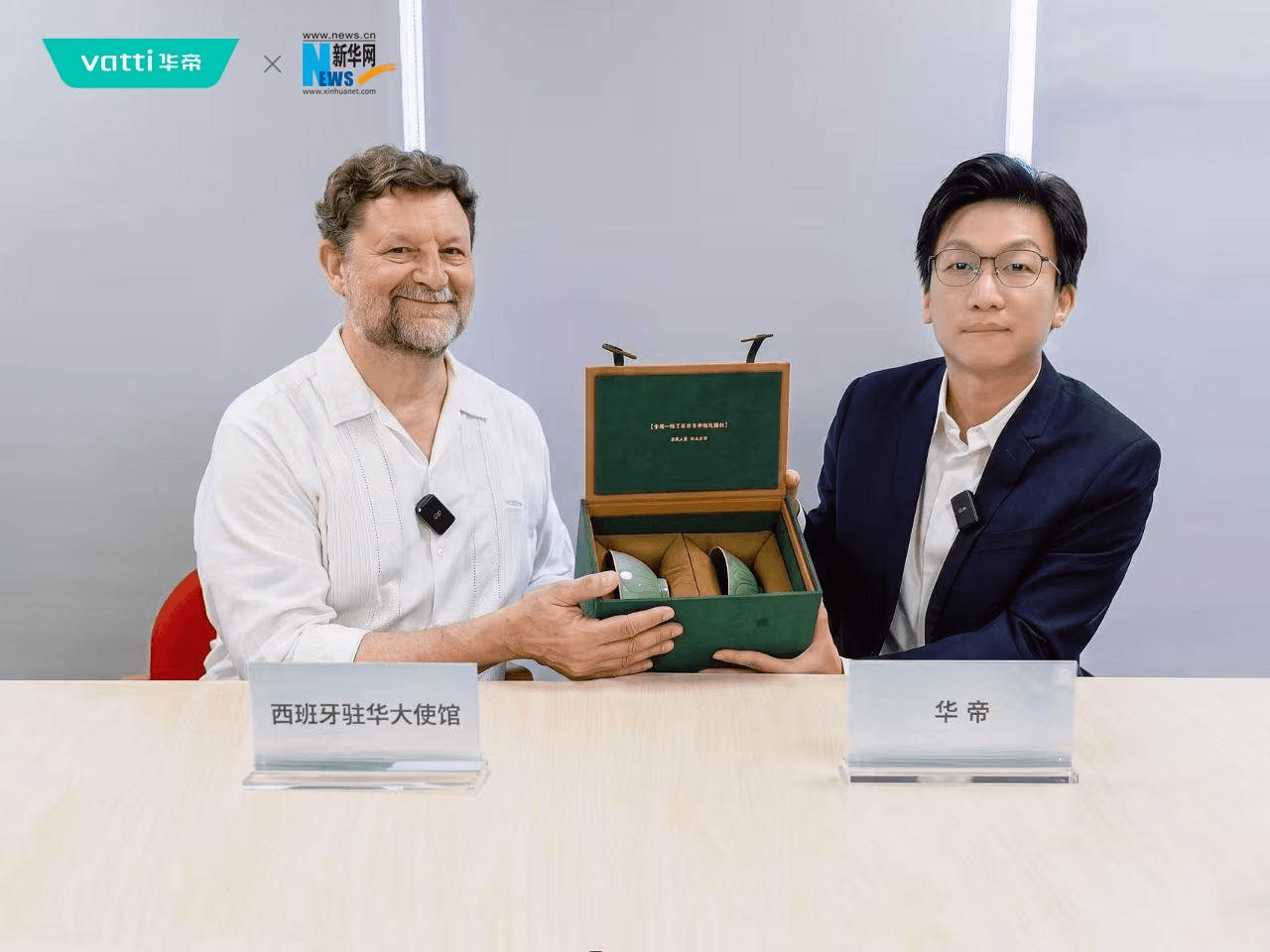
First came the “gift to the embassy.” During the World Cup, Vatti presented the Embassy of Spain in China with Longquan celadon collectibles created by Ye Xiaochun, a Chinese ceramic art master and representative inheritor of Longquan celadon intangible cultural heritage. The embassy returned the gesture with a Spain national team jersey. The celadon embodies a thousand years of intangible cultural heritage, aesthetics and craftsmanship, while the jersey symbolizes the sporting spirit of a great football nation. The objects may be small, but their significance is substantial.
Vatti Corporation Chief Marketing Officer (CMO) Pan Yezhao presents Longquan celadon collectibles to Buitrago, Minister-Counsellor and Consul General of the Embassy of Spain in China.
Through this form of people-to-people cultural diplomacy, Vatti formally moved from being “remembered by the public” to being “respected by the world.”
The “gift to the embassy” placed Longquan celadon at the center of a global stage. Next, if Spain won the title, consumers would also receive the same “celadon-green × plum-green Longquan celadon lotus-petal bowl” presented to the embassy. This “celadon giveaway” leveraged the World Cup’s extraordinary attention to bring intangible cultural heritage down from ceremonial halls, out of display cases and into everyday life. An “intangible cultural heritage + lifestyle” approach is increasingly attractive to younger consumers. By purchasing Vatti’s “Championship Package,” consumers could not only upgrade the quality of their kitchens, but also unlock a modern Chinese lifestyle infused with a richer sense of Eastern aesthetics.
The “real-gold draw” was an additional phased benefit introduced after Spain reached the quarterfinals. Vatti has now announced across all channels that the championship rewards are being fulfilled. An authoritative notary institution will supervise the entire process, with a livestreamed random draw conducted among users who meet the campaign requirements. Twenty winners will be selected under notarized procedures, and each will receive a 25-gram pure-gold football. While extending the campaign’s long-tail impact, this move also reinforces Vatti’s image as a publicly listed company that honors its commitments with integrity.
What Is the Secret to Choosing the Right Team?
When Spain lifted the FIFA World Cup Trophy, Vatti also cemented its reputation as a remarkably accurate “predictor.” After partnering with France in 2018 and watching France win the title, Vatti once again backed the eventual World Cup champion—an eye for winners impressive enough to become legendary.
That naturally raises a question: does Vatti have a unique formula for choosing which team to support?
Pan Yezhao revealed the key in an interview: “What we pay tribute to is not merely a team, but everyone who believes in the power of systems and uses professionalism to turn talent into results. These are values Vatti identifies with, and they represent the direction we have consistently followed for more than three decades.”
Looking back across three World Cups over eight years, Vatti partnered with France, Portugal and Spain respectively. The choices themselves reflect a clear industrial character. All three are leading European teams known for rigorous tactical systems and strong discipline, and each has repeatedly entered World Cups as a seeded contender. Pan Yezhao explained that professional football and physical manufacturing share similar underlying logic: what users ultimately experience is a simple, practical product and a smooth user experience, but supporting that simplicity are mature systems in R&D, supply chain management and quality control. In choosing Spain this year, what truly appealed to Vatti was the professional logic behind Spain’s tactical system.
“They take some of the most complex tactical coordination in the world and refine it until it flows almost instinctively on the pitch,” Pan Yezhao further explained. “That professional spirit—keeping the complexity to yourself while delivering a seamless experience to the audience—is what resonates most strongly with people in manufacturing.”
At the same time, Vatti uses fans’ attachment to their favorite team to communicate quickly and directly with Spain supporters, attracting people who similarly value professionalism and take life seriously to experience premium kitchen appliances made in China and learn about the “Torch Spirit” behind the Vatti brand, as well as its vision of “becoming a global leader in premium-quality kitchen spaces.” This form of “attraction marketing” is far more effective than one-way, force-fed messaging.
Looking back, the 2026 World Cup is becoming a more enduring touchpoint for both consumption and content. It connects the consumer journeys of different genders and audience groups, carries more expressive and emotionally charged forms of individuality, and continues to expand its influence through an ongoing ability to generate conversation. For brands to truly shape consumer perceptions through this global football celebration, they must identify opportunities beyond the surface and build a clear, direct path toward “interest and emotional resonance.”
As a premium kitchen appliance brand, Vatti may appear far removed from the World Cup. Yet by cleverly combining “favorite-team affinity + celadon collectibles,” it created a distinctive marketing ecosystem and ultimately achieved cultural outreach. This time, the victory was not only on the “economic ledger,” but also on the “cultural ledger.”
This was not routine marketing. It was a precise strategic move in Vatti’s journey toward premium positioning.